SA Rugby Requests Full Misconduct Hearing as Rassie Erasmus Receives Six-Match World Rugby Ban
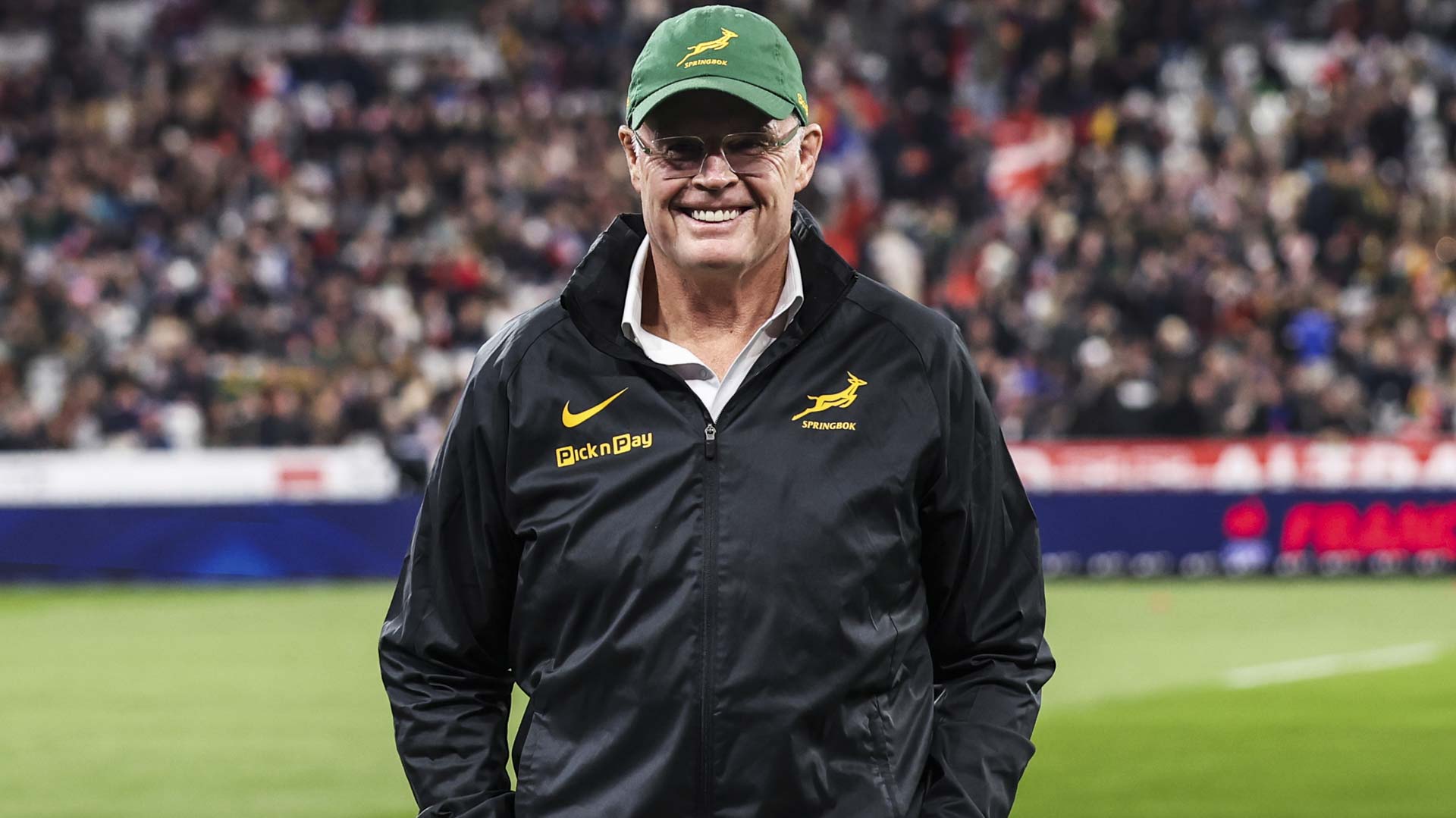
In response, SA Rugby has formally requested an expedited full misconduct hearing, seeking an opportunity for Erasmus to contextualise his statements and clarify that he never intended to accuse match officials of acting with ulterior motives.
Background to the Sanction
The disciplinary action stems from comments Erasmus delivered during Monday’s press conference ahead of Saturday’s final pool fixture at the Aviva Stadium. Reflecting on the Springboks’ narrow 21-19 loss to France in Paris the previous Friday, Erasmus raised concerns regarding officiating and disciplinary consistency:
Unpunished Tackles: Erasmus claimed France had escaped sanction for 16 to 17 "knee-drop" tackles, a technique recently outlawed by World Rugby on player welfare grounds, arguing that 11 warranted penalties and three met the threshold for yellow cards.
TMO Scrutiny: He questioned whether "manipulation" could explain why the television match official (TMO) opted not to intervene on those incidents.
External Disciplinary Remarks: The Springbok coach also commented on an incident involving Ireland flyhalf Sam Prendergast from Ireland's fixture against Fiji, predicting he would be cleared on a "technicality".
An independent three-person Match Official Abuse committee, chaired by Australian senior counsel Adam Casselden SC, reviewed the remarks. The panel determined that the comments crossed the threshold for serious misconduct by implying bias, questioning official integrity, and suggesting that match officials deliberately influenced match outcomes.
SA Rugby’s Formal Response
Following the announcement of the sanction, SA Rugby confirmed it would exercise its right under World Rugby’s judicial framework to challenge the automatic penalty via a full hearing.
An SA Rugby spokesperson stated that while the union respects the governing body's regulatory process, it has formally requested that Erasmus be afforded the platform to provide full context to his answers. Specifically, the union aims to assure the judicial panel that Erasmus had no intention of alleging bad faith or ulterior motives on the part of any match official. Given the severity of the charge and the imminent fixture against Ireland, SA Rugby noted that it trusts the hearing will be expedited and confirmed it will make no further public comment until the proceedings conclude.
World Rugby Rules & Sanction Process Explained
World Rugby issued the suspension under its Match Official Abuse Sanction Process, a streamlined disciplinary framework introduced in July 2026 alongside national member unions, competition organisers, International Rugby Match Officials (IRMO), and the International Rugby Players’ Association (IRPA).
How the Regulatory Framework Operates
| Regulatory Element | Provisions & Rules |
| Governing Authority | Operates in parallel with existing misconduct rules under World Rugby Regulation 18 and aligns with World Rugby’s social media protection programme to curb online abuse driven by public commentary from influential figures. |
| Panel Structure | Presided over by a pre-appointed standing committee comprising a senior judicial officer as chair and two experienced judicial panel members. |
| Objective Assessment | The panel evaluates statements against the Match Official Abuse decision-making matrix, an objective test weighing factors such as timing, public reach, and allegations of bias, prejudice, or bad faith. |
| Range of Outcomes | Depending on the matrix assessment, outcomes range from no further action, a guidance letter, or a formal warning, up to an automatic suspension for serious misconduct. |
| Right of Referral | Any individual issued an automatic sanction under the streamlined process retains the legal entitlement to refer the matter to a full misconduct hearing. |
Strict Terms of the Six-Match Ban
While the suspension remains in effect, World Rugby rules prohibit Erasmus from any match-day operational or public-facing duties across international fixtures:
No Coaching or Contact: Barred from coaching on match days or having any direct or indirect communication with players or team management during matches.
Venue Exclusion: Prohibited from entering the stadium, coaches’ box, playing enclosure, or technical area.
Official & Media Ban: Forbidden from approaching or communicating with match officials, participating in official post-match feedback channels, or undertaking any media duties.
If upheld, the six-Test suspension rules Erasmus out of Saturday's pool decider against Ireland (21 November), the Nations Championship Finals Weekend at Twickenham (29 November), and four 2027 Rugby Championship fixtures against New Zealand and Argentina before concluding ahead of the 2027 Rugby World Cup.
The 2026 Nations Championship has ignited a fierce off-field debate over law enforcement, player welfare, and disciplinary consistency across hemisphere lines. Following Springbok head coach Rassie Erasmus’s immediate six-match suspension for questioning television match official (TMO) inaction during South Africa’s 21-19 defeat to France, scrutiny has widened across other Northern versus Southern Hemisphere fixtures. At the centre of the controversy is the rollout of World Rugby’s newly enforced "hip-drop" and "knee-drop" tackle regulations, which have triggered contrasting outcomes on the pitch and in disciplinary boardrooms ahead of Saturday’s decisive clash between South Africa and Ireland in Dublin.
The Flashpoint in Paris and Dublin
The current disciplinary standoff began during Monday’s media briefing in Dublin, where Erasmus addressed South Africa’s narrow loss at the Stade de France. The Springbok mentor pointed to 16 or 17 alleged "knee-drop" tackles by French defenders that went unpenalised during the match, despite the technique being outlawed on 1 November 2026 to curb lower-limb injuries.
While Erasmus acknowledged that South Africa’s own handling errors and discipline cost them the game, his questioning of why the TMO failed to intervene—and his suggestion that ignoring clear foul play bordered on "manipulation" or "match-fixing"—crossed World Rugby's threshold for serious misconduct. An independent three-person Match Official Abuse committee handed down an automatic six-Test ban, prompting SA Rugby to request an expedited full misconduct hearing to contextualise the remarks.
Parallel Controversies Across North vs South Fixtures
Media coverage and rugby analysts across both hemispheres have highlighted that the friction surrounding tackle techniques and inconsistent sanctioning extends beyond the Springboks’ fixture in Paris. Since World Rugby formally introduced its strict interpretation of hip-drop and knee-drop tackles at the start of the November international window, several high-profile incidents have drawn widespread comparison:
| Match & Date | Incident & Players Involved | On-Field Action | Post-Match Disciplinary Outcome |
England vs Australia (8 Nov 2026, Twickenham) | Wallabies prop Angus Bell executed a hip-drop tackle on England wing Immanuel Feyi-Waboso, causing an ankle injury that ruled Feyi-Waboso out of the remainder of the tour. | Initially missed in live play; reviewed via TMO during an injury stoppage and sanctioned with a yellow card (upheld after bunker review). | No subsequent citing or suspension issued. |
France vs South Africa (13 Nov 2026, Paris) | Springbok management flagged 16–17 knee-drop tackles by French defenders during the match. | No penalties or TMO reviews initiated during the 80 minutes. | No citings issued against French players; Erasmus received a six-match ban for publicly questioning TMO inaction. |
Ireland vs Fiji (14 Nov 2026, Dublin) | Ireland flyhalf Sam Prendergast made a hip-drop tackle on Fiji captain Peceli Yato, who suffered an ankle injury and left the stadium in a protective boot. | Unpunished on the field by the referee and TMO during the match. | Prendergast became the first player in rugby history cited for a hip-drop tackle, facing an independent hearing ahead of the Springboks clash. |
Why Enforcement Has Sparked Debate
The disparity between these cases has fuelled intense discussion among coaches, pundits, and supporters:
On-Field vs Off-Field Intervention: Critics have questioned why Angus Bell’s hip-drop tackle against England was picked up by the TMO and punished with a yellow card, whereas Sam Prendergast’s similar challenge against Fiji, and the alleged knee-drop tackles against South Africa, passed without on-field intervention.
Northern vs Southern Perceptions: South African commentators and Erasmus himself pointed to perceived double standards in how Southern Hemisphere players have been sanctioned in recent disciplinary hearings, referencing recent bans handed to Springboks Jan-Hendrik Wessels and Lood de Jager, compared to Northern Hemisphere counterparts. Conversely, Northern Hemisphere media outlets have argued that while player welfare concerns are valid, publicly accusing officials of bias or manipulation undermines the sport's core values and exposes referees to online abuse.
Directive to Reduce TMO Stoppages: Analysts have also noted a broader tension within World Rugby’s officiating guidelines, which simultaneously encourage TMOs to limit match interruptions for flow while expecting strict enforcement of complex new tackle laws.
Impact on the Springboks Ahead of Dublin
For South Africa, the immediate fallout is both tactical and psychological. Sitting second in the Southern Hemisphere standings on 21 points, one point behind New Zealand, the Springboks must beat Ireland at the Aviva Stadium on Saturday, 21 November, to keep their hopes of reaching the Nations Championship Grand Final alive.
Unless SA Rugby’s expedited misconduct hearing overturns or reduces the sanction before kickoff, Erasmus will be barred from the stadium, coaching box, and any match-day communication with his players or assistants. Responsibility for match-day execution will fall on assistant coaches Mzwandile Stick, Tony Brown, and Jerry Flannery, alongside captain Siya Kolisi and the senior leadership group, as the Springboks seek to channel off-field adversity into on-field precision.
Press Conference Facebook Video: Watch here
Press Conference Facebook Video: Watch here
Facebook video: Watch here
Facebook match summary Video: Watch here
Final whistle
The controversy surrounding World Rugby’s new tackle laws and Rassie Erasmus’s suspension has exposed growing pains at the heart of international rugby’s inaugural Nations Championship. While the governing body’s crackdown on hip-drop and knee-drop tackles is rooted in legitimate player safety concerns, inconsistent application across North versus South fixtures has left teams and supporters searching for clarity. For the Springboks, however, the priority remains clear: navigating a turbulent disciplinary week and delivering a disciplined, clinical performance in Dublin regardless of who is permitted in the coaches' box.
#Springboks #WorldRugby #NationsChampionship #RassieErasmus
🏉🇿🇦⚖️🌍