President Cyril Ramaphosa Unveils Executive Action Plan to Confront SA's Femicide Epidemic
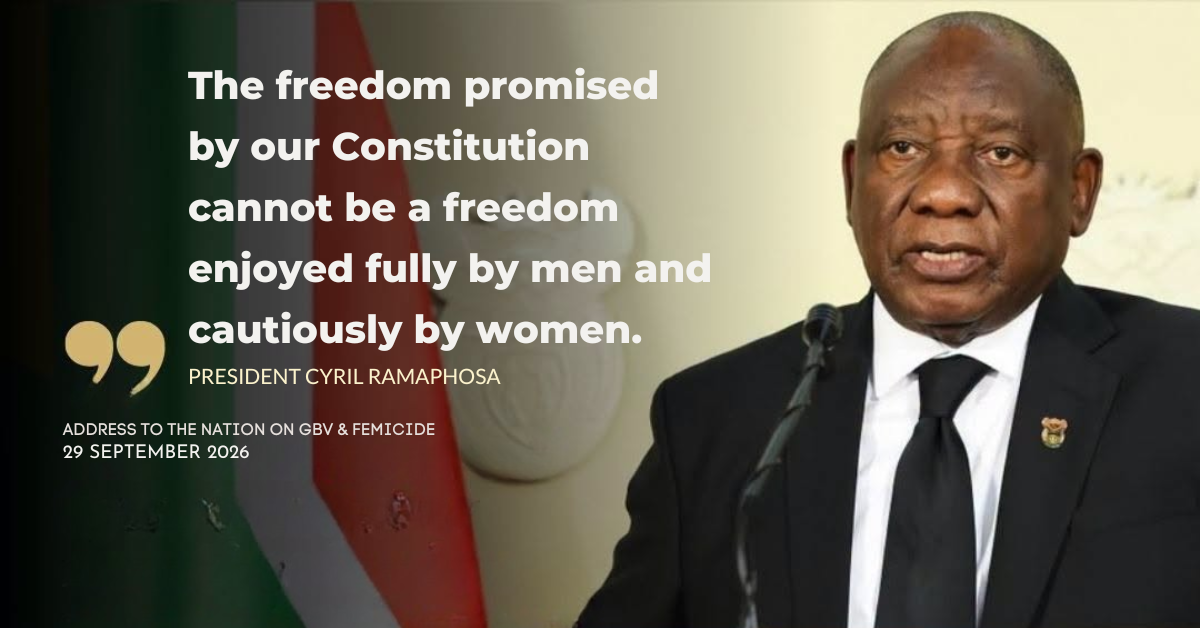
Prompted by the discovery of 11 women’s bodies across the City of Ekurhuleni in Gauteng since July 2026, including the recovery of a victim’s body in Springs, the President outlined an executive recovery directive
"Across our country, women are living with the terrible fear that they may be next," Ramaphosa stated during the national address
1. The Ekurhuleni Crisis and National Investigative Elevation
The immediate impetus for the national address follows a string of violent homicides in the Ekurhuleni metro area
To streamline law enforcement efforts, the South African Police Service (SAPS) has formally elevated the specialized multidisciplinary investigation to the national level
| Victim Identified | Location / Circumstance Mentioned | Investigative / Judicial Status |
| Ntombifuthi Nxumalo | Body recovered in Tembisa (Mooifontein Cemetery) | Suspect Victor Matome Rampedi arrested; appeared in Tembisa Magistrate's Court |
| Jabulile Ntimba | Ekurhuleni Metro | Two suspects arrested; currently appearing before court |
| Busisiwe Mahlangu | Ekurhuleni Metro | One suspect taken into custody |
| Itumeleng Kekana | Ekurhuleni Metro | Persons of interest identified; forensic material under analysis |
| Nomfesane Mjobo | Ekurhuleni Metro | DNA, cellular records, and blood samples collected |
| Gracious Nkomo | Ekurhuleni Metro | Forensic evidence collected; investigation ongoing |
| Elizabeth Moselakgomo | Ekurhuleni Metro | Evidence processing underway |
| Dineo Motapane | Ekurhuleni Metro | Forensic material collected; active leads pursued |
Addressing widespread public concern that the proximity and nature of the Ekurhuleni discoveries point to a single serial killer, Ramaphosa confirmed that SAPS investigators have not established evidence linking the murders to a single perpetrator
Beyond Ekurhuleni, the President honored women and children killed across the provinces, including 10-year-old Octavia Swarts (Kraaifontein), Nomakhwezi Zitha (Delft), Taymin Platt (Eersterust), Josephine Tshabalala (Orlando East), Siyavuya Mlunguza (Komani), Mariette Mouton (a 73-year-old Bredasdorp grandmother), Christina Nyalungu (a security officer at the University of Limpopo), Sibongile Mdali (Richmond), 15-year-old Amogelang Motshwaedi (Dinokana village), Pinky Shelembe and Ntombizana Mbanjwa (Richmond), and Amanda Kosani (Port Alfred)
2. Four-Point GBVF Recovery Plan & Executive Deadlines
To prevent cases from stalling inside administrative and judicial pipelines, President Ramaphosa announced a binding four-point recovery plan
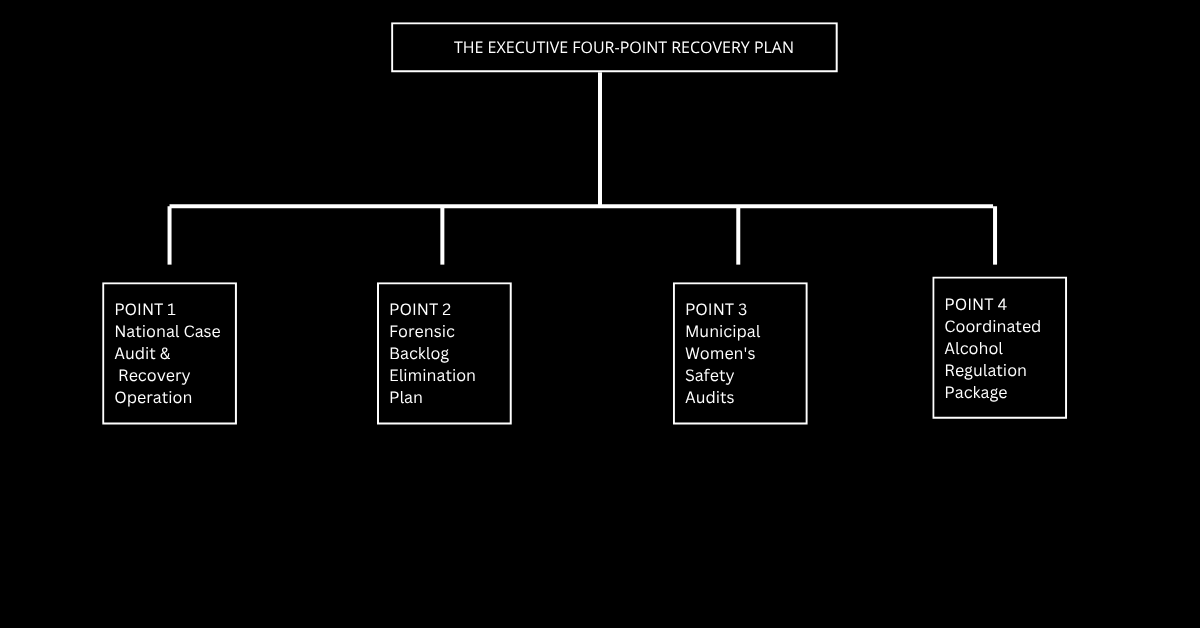
Point 1: National Case-Recovery Operation (60-Day Audit)
The Acting Minister of Police, Professor Firoz Cachalia, alongside Justice and Constitutional Development Minister Mmamoloko Kubayi, have been instructed to launch a national audit of all unresolved murders, attempted murders, rapes, and sexual offenses involving women and children
Point 2: Ring-Fenced Forensic Strategy (60-Day Mandate)
Directed to Minister Cachalia, Acting National Police Commissioner Lieutenant General Puleng Dimpane, and forensic service heads, the executive order requires the submission of a fully funded plan within 60 days to eliminate forensic processing backlogs
Point 3: Local Government Infrastructure Audits (60/90-Day Mandate)
Every municipality across South Africa is required to immediately begin a comprehensive women’s safety audit in coordination with provincial authorities and SAPS
Point 4: Coordinated Alcohol Legislative & Enforcement Package (60-Day Mandate)
Minister of Trade, Industry and Competition Parks Tau, working alongside the Ministers of Health, Social Development, Police, and Cooperative Governance and Traditional Affairs (COGTA), has been instructed to submit a legislative and enforcement framework to Cabinet within 60 days to curb alcohol-fueled violence
3. Structural Deficits, Institutional Responsibilities, and Resource Allocation
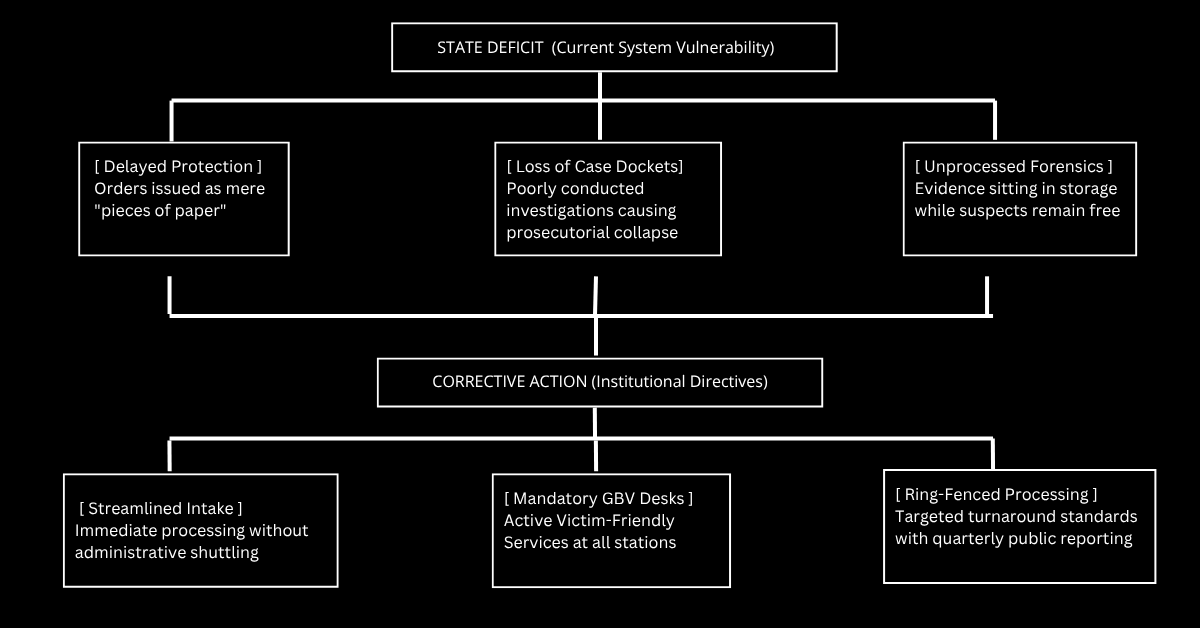
The President addressed institutional failures within the criminal justice system that undermine survivor safety and lead to collapsed prosecutions
Since GBVF was categorized as a national disaster in 2025, the state has reprioritized operational budgets and operationalized the National Council on Gender-Based Violence and Femicide, whose board held its inaugural meeting in Pretoria in August 2026
Resource Reallocation: Direct funding increases for SAPS Family Violence, Child Protection and Sexual Offences (FCS) Units, with additional allocations to be formally tabled by the Minister of Finance during the Medium-Term Budget Policy Statement (MTBPS) on 21 October 2026
. Support Infrastructure Expansion: Expanding specialized Sexual Offences Courts, broadening shelter coverage, and upgrading Thuthuzela Care Centres to provide unified medical, legal, forensic, and psychological care
. Bail Law Tightening: Legislative adjustments designed to heighten opposition to bail applications for individuals charged with gender-based violence, intimate partner abuse, and domestic assault
. Frontline Police Station Standards: Enforcing protocols across all Victim-Friendly Services and station GBV desks to prevent victims from being turned away, subjected to administrative delays, or forced to navigate complex bureaucratic channels when seeking protection orders
.
4. Societal Dynamics: Challenging Patriarchy and Male Accountability
A significant portion of the presidential address focused on the root social causes of violence, rejecting the premise that women should bear the burden of ensuring their own safety
"For too long, gender-based violence has been treated as a women’s problem to solve. That must change," Ramaphosa stated, emphasizing that constitutional rights cannot be enjoyed fully by men while women remain forced into precautionary captivity
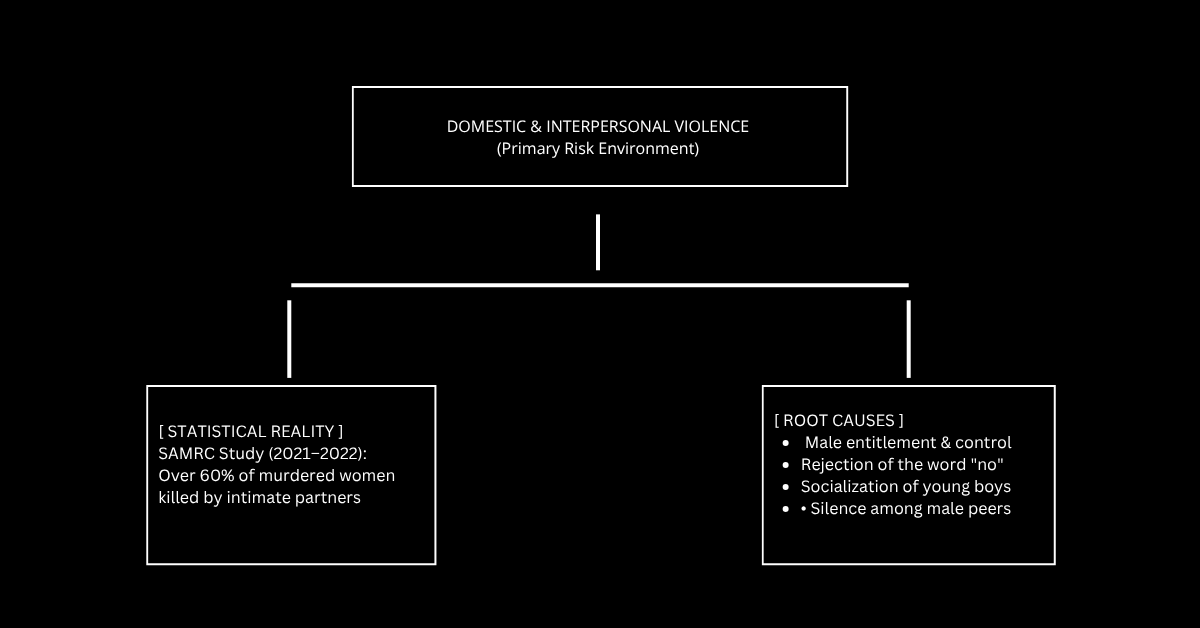
Drawing on empirical data from the South African Medical Research Council (SAMRC), the President highlighted that over 60% of women murdered in 2021 and 2022 were killed by an intimate partner, confirming that the primary hotspot for GBVF remains inside domestic homes and personal relationships
To address these cultural drivers, the executive issued the following directives:
Moral Regeneration Movement Reinforcement: The Minister of Sport, Arts and Culture has been instructed to reform the Moral Regeneration Movement, aligning its operational scope toward dismantling patriarchal attitudes, toxic male socialization, and social norms that excuse violence
. Male Mobilization and Public Leadership: Calling on men to abandon passive silence, the President highlighted public efforts by figures such as Springbok rugby captain Siya Kolisi and Proteas cricket captain Temba Bavuma, who use their platforms to urge men to confront abusive behavior within their social circles
. Parental and Social Prevention: Emphasizing early childhood development, the executive called for deliberate societal shifts in how young boys are taught about emotional regulation, handling rejection, mutual consent, and respecting women's autonomy
.
5. Monitoring Framework and Implementation Timelines
To ensure the directives move beyond rhetoric, the government has established an oversight framework monitored by the Inter-Ministerial Committee (IMC) and the National Council on Gender-Based Violence and Femicide
| Measure / Policy Directive | Responsible Executive Body | Statutory / Target Deadline | Oversight & Reporting Mechanism |
| National Case Audit & Recovery Plan | Acting Police Min. Cachalia & Justice Min. Kubayi | 60 Days | Individual case dockets assigned responsible officers & targets |
| Forensic Backlog Reduction Plan | Min. Cachalia, Acting Comm. Dimpane & Forensic Heads | 60 Days | Quarterly public progress reports on turnaround standards |
| Municipal Women's Safety Audits | All Local Municipalities, SAPS & Provincial Govs | 60 Days | Identification of physical hazards submitted to SAPS & COGTA |
| Municipal Infrastructure Remediation | Local Municipalities & COGTA | 90 Days (post-audit) | Funded implementation plans with binding completion dates |
| Alcohol Control Legislative Package | Trade Min. Tau, Health, Social Dev, Police & COGTA | 60 Days | Formal policy and legislative submission to Cabinet |
| Initial National Consolidated Report | Inter-Ministerial Committee & National Council on GBVF | 90 Days | First public report to the nation; quarterly updates thereafter |
"These are not just a statement of good intentions," President Ramaphosa concluded
The ultimate test of these newly announced directives lies in whether binding deadlines translate into safer communities, swift forensic turnarounds, and justice for victims. Seven years after initial national declarations on the GBVF crisis, the nation now demands transparent accountability across every municipality and law enforcement department to ensure women in South Africa can live freely, without fear.
#EndGBVF #StopGBVF #EnoughIsEnough #GovZAUpdates
🇿🇦📢🚨🛡️