Subterranean State: Why Potchefstroom’s Borehole Boom is Colliding with New Criminal Laws
As municipal water tariffs hit record highs and infrastructure failures continue to plague local supply lines, households and businesses across Potchefstroom are turning to underground alternatives. Private boreholes are being drilled at a pace not seen in years.
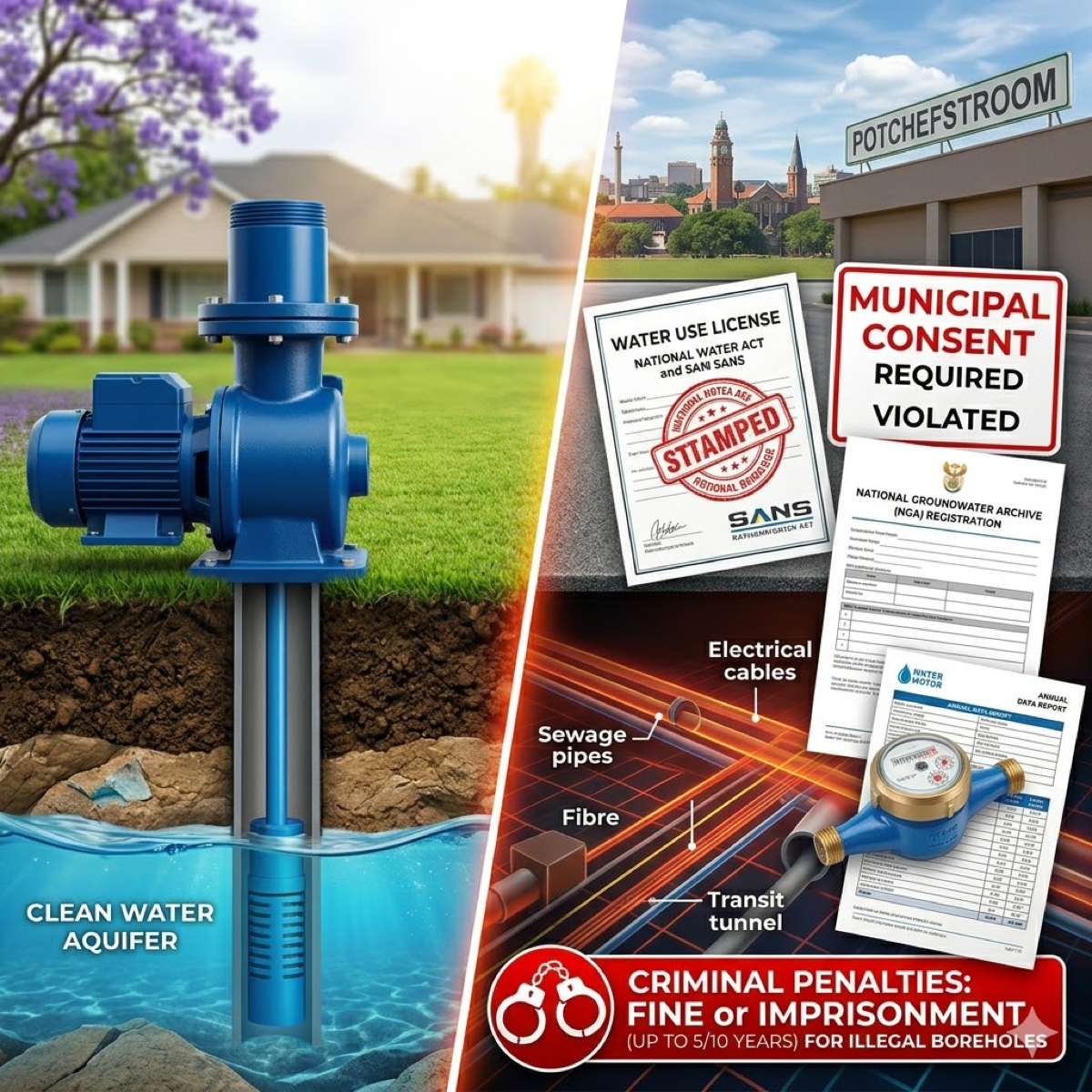 Image(Created) : The Go-To Guy
 For many local residents, a borehole feels like the ultimate ticket to water independence ,a smart home improvement that can save a household over R30,000 annually, pay for itself in roughly five years, and add up to 15% to a property’s resale value.
However, legal experts and national policymakers are issuing a stark warning: the era of the unregulated backyard "free-for-all" is officially over. A major compliance gap has emerged, and many property owners are breaking the law without even realizing it.
With the Department of Water and Sanitation (DWS) currently finalizing sweeping new national groundwater regulations, local residents who fail to get their paperwork in order could face devastating civil liabilities, halted property transfers, or even criminal prosecution resulting in prison time.
The Illusion of Ownership: Ground Water is a National Resource
“There’s a perception that if you own the land, you can drill wherever you want,” says Cor van Deventer, director at the law firm Van Deventer Dowlath & Marx Incorporated. “But that’s not how the law works. Groundwater is a national resource, and both the National Water Act and municipal bylaws set out clear obligations.”
Under the National Water Act (NWA) of 1998, the legality of a borehole hinges entirely on its intended use:
Domestic Use (Schedule 1):If a borehole is used strictly for basic household needs,such as watering a residential garden, doing laundry, or keeping household pets,it falls under Schedule 1. Currently, no formal National Water Use License (WULA) is required for this level of extraction.
Commercial & Agricultural Use:If the water is intended for commercial irrigation, industrial processes, or supplying multiple dwellings (such as a local townhouse complex or student accommodation block), a formal water-use license is strictly mandatory.
The Million-Rand Mistake: Infrastructure and Servitudes
A borehole is a highly complex engineering project, not a simple DIY task. Digging blindly into the earth can carry catastrophic financial consequences.
Van Deventer points to a severe incident where an illegally drilled borehole in Killarney caused structural damage to a section of the underground Gautrain tunnel.
The Gautrain Management Agency subsequently pursued aggressive legal action against both the property owners and the contractors.
For property owners in Potchefstroom, the risks are identical. Drilling too close to municipal sewer lines, stormwater systems, fibre routes, or electricity cables can result in massive civil claims.
While a reputable drilling contractor should check for underground services, the ultimate legal liability rests squarely on the shoulders of the property owner.
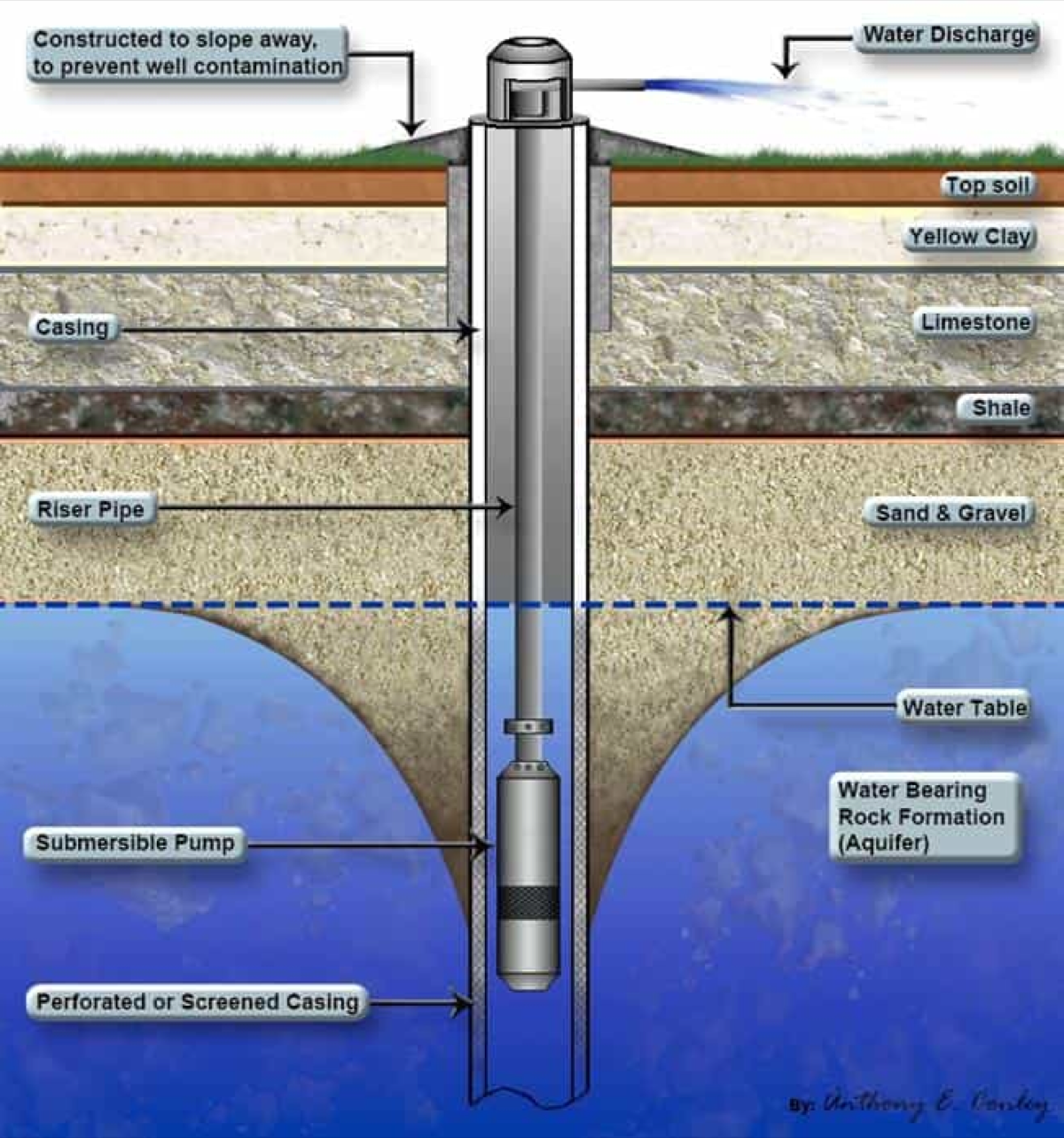 Image (Google)
Local Realities: JB Marks Municipal Bylaws
While national law governs the water itself, local municipal bylaws govern the physical act of drilling. Across South Africa, cities are rapidly tightening enforcement. For example, the City of Johannesburg introduced a strict digital application process requiring engineering and environmental approvals, while the City of Cape Town mandates a 14-day prior notification.
Locally, the JB Marks Local Municipality requires property owners to comply with zoning laws and structural approvals. Homeowners frequently make the mistake of assuming the drilling company handles the municipal permissions. Legally, the contractor can only assist; securing formal municipal consent before the rig arrives remains the property owner's personal obligation.
Furthermore, urban boreholes are not "set and forget" systems. Due to aging and failing municipal sewer infrastructure, urban groundwater can easily become contaminated. To protect family health, owners must subject their borehole water to annual laboratory testing.
The New Frontier: Drastic Draft Regulations and Prison Sentences
The regulatory landscape became significantly more severe following the publication of strict draft groundwater regulations by DWS Minister Pamela Majodina (Government Notice No. 6935).
Recognizing that the state currently has no accurate record of how many boreholes exist or how much water is being drawn from the nation's critical underground buffers, the government is moving to map every private water source in the country via the National Groundwater Archive (NGA).
These impending regulations apply to all groundwater users,both new and existing,across both urban and rural areas, making no distinction between a suburban garden in Potchefstroom and a commercial farm in the broader North West province.
Strict Requirements for New Drilling:
Under the compiled framework, anyone planning to drill a new borehole must follow a rigid sequence:
Notify the local municipality and obtain a unique Geosite Identifier from the NGA before any work commences.
Hire only a drilling contractor who is formally registered with the NGA.
Ensure the borehole location complies with strict national placement standards.
Upload all drilling data and yield-test results to the NGA within two months of completion.
Install a regulated pump that perfectly matches the borehole's tested yield to prevent aquifer depletion.
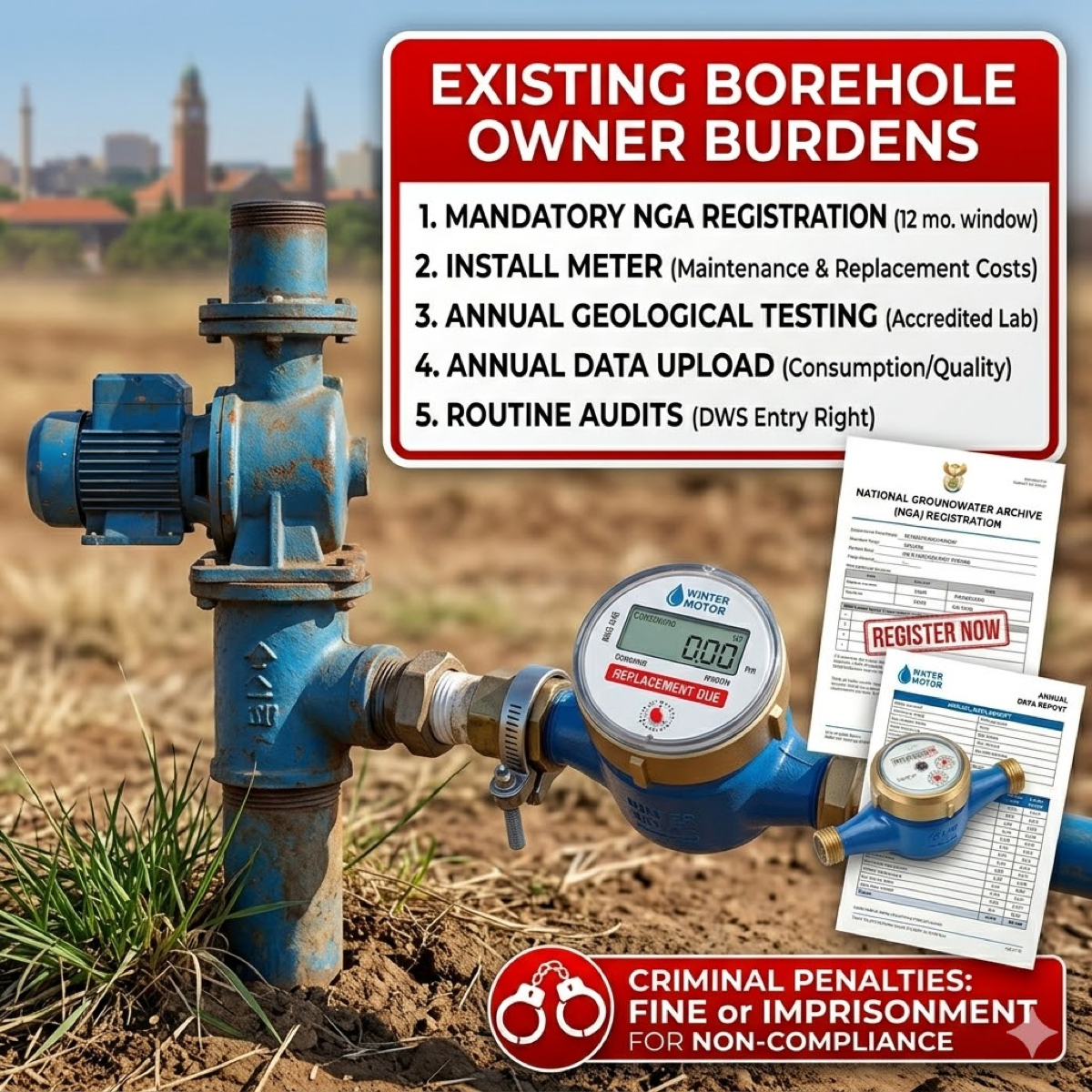
Heavy Burdens for Existing Borehole Owners:
If a property already features an active borehole, the owner will be legally required to:
Register the borehole on the NGA within a strict 12-month grace window once the regulations are fully enacted.
Install a physical water meter to monitor exact usage, bearing full financial responsibility for its maintenance and replacement if stolen or damaged.
Conduct annual chemical water-quality tests at an accredited laboratory.
Upload all consumption and quality data annually to the DWS system.
Allow DWS officials permission to enter the private property for routine compliance audits.
No-Drill Prohibited Zones:
The regulations establish strict environmental and safety buffers, completely outlawing drilling:
Within 50 meters of cemeteries, pit toilets, underground fuel storage tanks, or landfill sites.
Within 1 kilometer of strategic national infrastructure.
Within 5 kilometers of freshwater ecosystems or critical biodiversity areas.
 Image(Created) : The Go-To Guy
 Severe Criminal Penalties:
The draft legislation introduces unprecedented criminal teeth to water enforcement. Individuals found guilty of non-compliance face a fine and/or up to 5 years in prison for a first offense, and up to 10 years in prison for a subsequent conviction.
Property Transfers: The Financial Risk for Buyers and Sellers
This compliance gap is already spilling over into the real estate market. An illegal or unregistered borehole is no longer a minor issue; it can entirely derail a property sale.
Increasingly, commercial banks are refusing to approve home bonds unless the seller provides a valid borehole certificate, accredited water-quality test results, or proof of municipal registration. Sellers are legally obligated to disclose the status of a borehole on their property.
Discovering a non-compliant system during a sale can lead to severe transfer delays, costly legal disputes, claims of misrepresentation, or a forced reduction in the final purchase price.
Property experts advise local buyers to demand comprehensive compliance paperwork upfront before signing any offer to purchase.
The Homeowner’s Compliance Checklist
To ensure complete legal compliance and protect against future liability, Potchefstroom property owners should strictly follow this sequence:
[ ] Municipal Notification: Formally notify or apply to the local municipality before any machinery enters the property.
[ ] Servitude Verification: Explicitly verify the location of all municipal servitudes, cables, and pipes with underground maps.
[ ] Vetted Contractor: Hire an NGA-registered drilling professional who guarantees adherence to South African National Standards (SANS 10299).
[ ] NGA Registration: Ensure the borehole is registered and all yield data is uploaded to the National Groundwater Archive within the required timeframe.
[ ] Water Metering & Testing: Install a reliable water meter and book an initial chemical water test with an accredited laboratory.
[ ] Document Safeguarding: Keep all certificates, municipal approvals, and test results on file to ensure smooth future property transfers.
As Potchefstroom continues to navigate shifting climate patterns and local utility constraints, groundwater will remain an invaluable asset,but only if accessed within the boundaries of the law. Upfront compliance is the only definitive shield against catastrophic financial and legal ruin.